
Gun modding: print a pistol from two spools of filament, fit two mods, hand it to the client
This route sells custom gun orders. How to get the permits, how order clients are drawn in, what each order wants, which gun takes which mods for the most money, why you deliver the cheapest gun, and why the "best" order works the other way round. Numbers are kept current with each patch.
Updated 2026-11-085 chapters
Quick card
- The money is custom gun orders. A weapon permit in the showcase brings in clients who order a gun with enough firepower, accuracy, style or bulk. An order looks at the stats and calibre only, never at which gun it is, and once delivered the gun and its mods are gone. So the best carrier is the 3D-printed Liberator: two spools of filament (12 each) and three nights for a brand-new one. With an extended magazine and a pistol auto sear it takes everything a tier-three firepower order pays, seven hundred and thirty-five; with the extended magazine and a makeshift suppressor it takes everything a tier-two intimidating order pays.
- The ticket is modest. “Retired Gunsmith” in the underground network costs 650 and hands you a worn 3D printer with its own charge, the pistol chip, two spools of filament, nine mods, a screwdriver and a gun part the same day. Then “Weapon Permit I” at 300, and II and III at 600 and 900, in that order.
- Permits take reputation. Buying the upgrade is not the permit: each morning as the shop opens, with security reputation at 20 / 50 / 80 or more, the Class I / II / III permit lands on your table; below 0 / 30 / 60 an officer comes to revoke it. A permit brings clients only from the showcase, and the day’s clients are already set when the shop opens, so it works from the next day.
- Four traps.
- Every requirement means strictly above: firepower above twenty-two is not met by twenty-two.
- Delivery destroys the gun and every mod on it, so never hand an expensive gun to a normal order; only the “best” order works the other way, where the dearer the gun and the more mods, the better.
- A gun no permit of its level covers is contraband: delivering it still records weapons-trafficking evidence worth the gun, and from level two up a search destroys it, mods and all.
- “Size” is the cells the gun and its mods cover, again strictly above: every pistol covers ten, the SMG and the shotgun seventeen; muzzle suppressors and the compensator, extended magazines, stocks, the bipod, the grenade launcher and the foregrip make it bigger, and the order table counts it.
- Mods are all legal. No tool to fit or remove them and no risk selling them on their own, but few customers take them.
Unlock order
- 1Retired Gunsmith650
- 2Weapon Permit I300
- 3Weapon Permit IINeeds Weapon Permit I first600
- 4Weapon Permit IIINeeds Weapon Permit II first900
The kit lands in the back room the same day. The printer is worn and holds 100 charge; the nine mods are a red dot sight, a suppressor, a makeshift suppressor, a laser sight, a toy laser pointer, two .22 Magazines, a High Capacity .22 Magazine and improved internal springs. The Retired Gunsmith calls the next day and then every Thursday. He always brings a new 3D printer, a screwdriver, four spools of filament and seven chips: makeshift red dot, toy laser, Bottle of Water (Small), pistol, improved springs, box cutter and kitchen knife. The rest is chance: from day twenty the red dot, laser, suppressor, hatchet and meat cleaver chips turn up more often and the double-pistol chip appears; printer modules, frame chips and the gun-part chip grow likelier with each permit you hold; the magazine chips and a dozen mods come at one to five in ten each. He sells no guns and no ammunition, at the retired suppliers’ markup. Filament needs no waiting for him: the regular supplier and the Junker always have it.
A permit covers guns and ammunition of its own level: Class I covers level one (the Liberator, the Nestfire, plain .22 SR Ammunition and 10mm Ammunition), Class II level two (the Ironcraft 10, the Sentinel, the revolver, armour-piercing rounds), Class III level three (the SMG and the shotgun). A covered gun becomes “restricted”: not contraband, no evidence when sold, invisible in a search, and its markup to customers is half the contraband one (contraband levels one to three add 35% / 70% / 100%). When a permit is revoked its guns turn contraband again but the ammunition stays legal; once reputation recovers the permit is reissued the next morning. Class I also protects the counter shotgun the mentor gave you: when Security comes to call off the Aug alert, it lets you keep the gun if you hold Class I, and a gun already taken comes back when you buy the Weapon Permit I upgrade or on any morning you hold Class I. Losing Class I takes the shotgun with it until the permit is reissued.
The clients come from the showcase: the Class I / II / III permit draws a Lower Level Citizen, a Mercenary and an Upper Level Citizen with tier one, two and three orders, at 50% / 40% / 35% a day; for every day the permit sits in the showcase with nobody coming, half the base chance is added (for Class III: thirty-five, fifty-two, seventy, eighty-seven percent, then certain), and it starts over once a client comes. With all three permits out, three can come in one day. The Class I upgrade also gives a Firearm Neon Sign, which in the showcase draws a gun seller 40% of days, and Class III’s heavy sign draws the upper-level gun seller 25% of days; they sell to you at a fifth off. A shop started as the Gunsmith already has the Class I permit in its showcase, a worn printer and a stock of guns and mods, and an order client on day one.
Each tool
3D printer
- What goes in: one chip in the chip slot, what the chip needs in the input grid (filament, scrap metal, electronic parts, metal ingots), a battery, and printer or universal modules in the module bay.
- What comes out: the chip decides, all in the chip table. The pistol chip turns two spools of filament into a brand-new Liberator; mod chips make one to four at a time. The chip itself is not used up.
- How long, and does it need power: 24 progress a night; the pistol chip needs fifty, three nights, counting the night you start it. Power on the card.
- The usual mistakes:
- The 10mm magazine chips need a Metal Printer Module; frame and gun-part chips need the Computer Numerical Control Module as well, which slows the printer by a quarter, so a frame takes four nights. Both only count from the printer’s module bay; in the input or output grid they do nothing. Only the Retired Gunsmith sells those modules, and only with higher permits are they common.
- Print quality is the modules’ quality added up and divided by four, and printed Liberators and frames have all six stats scaled by it. A frame also takes the metal ingot’s purity: a perfect ingot doubles it, a low-purity one takes a fifth or more off. One gun part turns the frame into a gun, in New condition.
- Without power it stops the next night.
Guns
- Where from: the Liberator you print. Gun sellers: the lower-level seller always has a Nestfire, the mercenary sells the Ironcraft 10 (a revolver one time in four), the upper-level seller mostly a Sentinel, otherwise an SMG, mostly in Poor or Fair condition. With high lower-level reputation the Lower Level Gunsmith comes by with guns in Good condition. With high security reputation the security requisition officer sells guns by the permits you hold, and only he has the shotgun, both stocks, the bipod, the grenade launcher and the foregrip.
- Stats: six of them, firepower, style, reliability, recoil control, ergonomics and accuracy, all better higher; plus size, suppression and calibre. Each gun’s values at its default condition are in the gun table. Each grade of condition better adds fifteen percent to all six, New thirty; each grade worse takes fifteen off.
- Repair: use a gun part on your own gun that is neither New nor Excellent. The chance is the gun’s repair chance in the table; a failure adds that chance again to the next try, and a success raises the condition one grade, up to Excellent. The part is used up either way. The Nestfire and the Liberator always succeed first time; the SMG has four in ten the first time, eight in ten the second. The revolver can be repaired and disassembled too.
- Disassemble: the screwdriver on your own gun drops its mods into the gun’s cell, and any that do not fit vanish with it; the gun is destroyed and gives back, by model: the Liberator two spools of filament; the Nestfire two gun parts, a spool and two scrap metal; the Ironcraft 10 two parts, a spool and four scrap; the Sentinel four parts; the revolver five; the SMG six; the shotgun seven.
- The usual mistake: the revolver cannot be modded; it can only be delivered or sold as it is.
Mods
- Fitting: drag a mod into the matching slot of your own gun; no tool. Dragged out, it comes back as it was. Every gun but the revolver has one stock, rail, magazine, underbarrel and barrel slot and three special slots; the same mod cannot go in twice, and only one kind of internal springs fits.
- Limits: magazines go by calibre and gun: .22 SR magazines only on the Liberator and the Nestfire, 10mm pistol magazines only on the Ironcraft 10 and the Sentinel, SMG magazines only on the SMG; stocks and the foregrip only on the SMG and the shotgun; the bipod, the grenade launcher and the extended barrel only on the SMG; the auto sear only on the four pistols. Nothing fits a pistol’s stock slot or the shotgun’s magazine slot.
- The sum: each stat = base × (one hundred + the condition’s bonus + every mod’s percentage) ÷ one hundred, fractions dropped, plus every mod’s flat value.
- Value: a gun’s price is its body at its condition plus every mod’s own price. So a mod never makes a gun cheaper. What costs stats: the makeshift mods; the auto sear (reliability and recoil control); muzzle pieces, the extended barrel, the bipod, the grenade launcher, the Guardian stock and every large magazine cut ergonomics, and the box magazine cuts reliability too. Pick from the mod table for handling orders.
- The usual mistake: mods are not weapons, so none of the weapon buyers the showcase draws will buy them on their own; only all-type buyers such as the merchant do.
Orders
- Who comes: see the permits above. Tier one draws one of nine kinds, tiers two and three one of eight; one kind is the “best” order and one the service order. If on the day the client comes you own no gun of that tier (tier one: a Liberator or Nestfire; tier two: an Ironcraft 10, Sentinel or revolver; tier three: an SMG or shotgun; frames do not count), half the time it is a service order outright.
- Delivering: put the gun in the back room; “Accept” only works once every hard requirement is met, and with several guns there the last one placed is judged. Any gun will do: a tier-one client takes an SMG, a tier-three client a Liberator. There is no deadline, but only this visit; turned away once, the client asks for a melee weapon instead, and turning them away again costs no reputation.
- Pay: the base (plus zero to ten at random) and each bonus met are each multiplied by “one hundred + the gun market event’s bonus + your retail markup” ÷ one hundred, rounded, and added up. The retail markup on normal difficulty is 15%. Every event that raises weapon prices (a lower-level riot, a lower-level lynching, a revolutionary mobilisation, a security raid on the black market, a station blackout) raises order pay by the same share, and order clients come more often too; a black-market weapons shipment does the opposite, a third less for two days.
- The best order: only the calibre counts (tier one wants .22 SR, tiers two and three 10mm), and it pays the market price plus 50%. The market price marks up the body and every mod by the retail markup, so here it is the other way round: the dearer the gun and the fuller its mods, the better, and the mods sell for over one and seven tenths their value. A fully kitted SMG brings in over fifteen hundred. The shotgun and the revolver have the wrong calibre for any best order.
- The service order: the client brings a gun of their own and wants one or two stats raised. It pays a fee (from 30 / 60 / 100 by tier) + the price of the mods you fit + the gun parts used in successful repairs + the bonuses met. The targets are set from the gun’s condition as it came in, so repairing first and modding after both count. If it falls through, the gun is destroyed and every mod and part you put in comes back.
- Afterwards: the client may also want ammunition (only for that gun’s calibre) or a melee weapon, and from tier two explosives, more likely the more bonuses you met.
Ammunition
.22 SR Ammunition, 20, and 10mm Ammunition, 30, each with armour-piercing and non-lethal kinds. Ammunition is only merchandise: it is never loaded into a gun and changes no stat, value or order. There is no .45 AFP or 12 gauge ammunition in the game, so the revolver and the shotgun get none.
Running the chain
- Buy Retired Gunsmith and Weapon Permit I. Keep security reputation at 20 or more and the next morning the Class I permit is on your table; put it in the showcase, and from the day after it draws clients.
- Set the printer up in the shop with the pistol chip and two spools of filament; three nights later a brand-new Liberator comes out. Until then the kit’s mods and a cheap gun like the Nestfire can take orders too.
- When an order client comes, read what they want and fit mods by the “With” column of the order table: a tier-one accurate order takes the red dot and improved springs, the suppressed one a suppressor on top, the firepower one a .22 Magazine, the stylish one the extended magazine and the ammo display, the intimidating one a makeshift suppressor.
- Gun in the back room, accept, collect. The mods leave with the gun, so restock by the table: filament from the regular supplier or the Junker, mods from the Retired Gunsmith or gun sellers, or buy chips and print them.
- Moving up: at 50 reputation the Class II permit brings mercenaries, at 80 the Class III permit brings upper-level citizens, paying two to three times tier one. A printed gun with the extended magazine and a makeshift suppressor takes all of a tier-two intimidating order, and with the auto sear all of a tier-three firepower order; on the tier-three stylish order it gets only a little over half, and a Sentinel with a suppressor and a laser sight does better; the tier-three intimidating order wants an SMG with the Guardian stock and a three-cell muzzle piece (the makeshift suppressor or the Night Owl); the reliable and well-rounded tier-three orders want an SMG or a shotgun, and the handling orders a 10mm gun. Bought guns are mostly Poor or Fair, so repair them to Good before fitting.
- For a best order, hand over the dearest gun of the right calibre with every mod it can take.
- The level-one Liberator and Nestfire earn only a warning and a little security reputation in a search; level two and up without a permit are seized, level three fined too, and the mods on them go with them.
The numbers
| Tier | Order | Hard requirements | Everything met | Printed gun, at most | With | Clears more |
|---|---|---|---|---|---|---|
| One | Accurate | Firepower > 17 | 311 | 311 | Red Dot Sight, Improved Internal Springs | – |
| One | Accurate, suppressed | Firepower > 17 | 397 | 397 | Red Dot Sight, Suppressor, Improved Internal Springs | – |
| One | Intimidating | Firepower > 11 | 173 | 147 | Makeshift Suppressor | – |
| One | Firepower | Firepower > 11 | 249 | 249 | .22 Magazine | – |
| One | Stylish | Style > 4 | 369 | 369 | Extended .22 Magazine, Ammo Display | – |
| One | Well-rounded | Firepower > 15, Reliability > 23, Accuracy > 23 | 408 | 408 | Red Dot Sight, Suppressor, .22 Magazine, High Durability Internal Springs, Tuned Trigger Group | – |
| One | Handles well | Ergonomics > 44, Recoil Control > 54 | 316 | 316 | Red Dot Sight, Compensator, Toy Laser Pointer, Tuned Trigger Group | – |
| Two | Intimidating | Firepower > 25 | 437 | 437 | Makeshift Suppressor, Extended .22 Magazine | – |
| Two | Reliable, suppressed | Reliability > 32 | 532 | 364 | Suppressor, High Durability Internal Springs, Ammo Display | Ironcraft 10, Suppressor, High Durability Internal Springs: 532 |
| Two | Stylish | Style > 25 | 436 | 436 | Red Dot Sight, Night Owl Suppressor, Extended .22 Magazine, Target Acquisition Device, Ammo Display | Ironcraft 10, Night Owl Suppressor: 436 |
| Two | Firepower | Firepower > 26 | 437 | 437 | Extended .22 Magazine | – |
| Two | Well-rounded | Firepower > 25, Reliability > 29, Accuracy > 33 | 608 | 562 | Red Dot Sight, Suppressor, Extended .22 Magazine, Target Acquisition Device, High Durability Internal Springs, Match Grade Barrel | Peacemaker Heavy SMG, Buckler Stock, Suppressor: 608 |
| Two | Handles well | 10mm, Ergonomics > 39, Recoil Control > 29 | 454 | cannot | – | Sentinel Mk. III., Compensator, Tuned Trigger Group: 454 |
| Three | Intimidating | Size > 16 | 805 | cannot | – | Peacemaker Heavy SMG, Guardian Stock, Makeshift Suppressor: 805 |
| Three | Firepower | Firepower > 59 | 735 | 735 | Extended .22 Magazine, Pistol Auto Sear | – |
| Three | Reliable, suppressed | Reliability > 59 | 931 | cannot | – | Peacemaker Heavy SMG, Suppressor, Improved Internal Springs: 931 |
| Three | Stylish | Style > 52 | 735 | 402 | Red Dot Sight, Night Owl Suppressor, Extended .22 Magazine, Target Acquisition Device, Ammo Display | Sentinel Mk. III., Suppressor, Laser Sight: 735 |
| Three | Well-rounded | Firepower > 57, Reliability > 57, Accuracy > 44 | 1040 | cannot | – | Rampart Dual-Action Shotgun, Makeshift Red Dot Sight, Suppressor, Foregrip, Improved Internal Springs, Tuned Trigger Group: 1040 |
| Three | Handles well | 10mm, Ergonomics > 54, Recoil Control > 24 | 782 | cannot | – | Sentinel Mk. III., Compensator, Toy Laser Pointer, Tactile Memory Grip Gel: 627 |
Rewards on normal difficulty with no event running, at the lowest base; every requirement means strictly above, and equal does not count; size is the cells the gun and its mods cover. The printed gun is taken as New, the others as Good, while sellers mostly sell Poor or Fair, so repair to Good first or the build may fall short. The gun in the last column is the one that clears more after its own and its mods' values.
| Gun | Value | Contraband level | Caliber | Default condition | Firepower | Style | Reliability | Recoil Control | Ergonomics | Accuracy | Size | Repair chance | Moddable |
|---|---|---|---|---|---|---|---|---|---|---|---|---|---|
 Liberator 3D Printed Pistol | 40 | 1 | .22 SR | New | 19 | 6 | 19 | 71 | 52 | 19 | 10 | 100% | Yes |
 Nestfire Compact | 120 | 1 | .22 SR | Good | 20 | 15 | 30 | 65 | 50 | 30 | 10 | 100% | Yes |
 Ironcraft 10 | 160 | 2 | 10mm | Good | 30 | 30 | 34 | 30 | 40 | 40 | 10 | 80% | Yes |
 Sentinel Mk. III. | 200 | 2 | 10mm | Good | 30 | 40 | 42 | 35 | 50 | 45 | 10 | 65% | Yes |
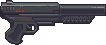 Peacemaker Heavy SMG | 280 | 3 | 10mm | Good | 65 | 55 | 65 | 25 | 60 | 50 | 17 | 40% | Yes |
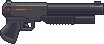 Rampart Dual-Action Shotgun | 310 | 3 | 12 gauge | Good | 85 | 75 | 75 | 30 | 45 | 50 | 17 | 35% | Yes |
 Lancewell Revolver | 240 | 2 | .45 AFP | Good | 36 | 50 | 50 | 38 | 55 | 52 | 10 | 60% | No |
The six stats and size are at the gun's default condition (a printed Liberator comes out New, thirty percent up on all six); each grade better adds fifteen percent, each worse takes fifteen off. Gun sellers mostly sell Poor or Fair. A failed repair adds its chance again to the next try.
| Mod | Slot | Value | Effect | Fits |
|---|---|---|---|---|
 Red Dot Sight | Rail | 60 | Style +20% +5, Accuracy +25% +10 | any gun with the slot |
 Makeshift Red Dot Sight | Rail | 25 | Style -5% -2, Reliability -15% -5, Accuracy +15% +5 | any gun with the slot |
 Suppressor | Barrel | 55 | Style +25% +8, Recoil Control +15% +5, Ergonomics -5% -2, proper suppressor | any gun with the slot |
 Night Owl Suppressor | Barrel | 90 | Style +40% +12, Recoil Control +25% +8, Ergonomics -10% -3, proper suppressor | any gun with the slot |
 Makeshift Suppressor | Barrel | 15 | Style -50% -15, Reliability -35% -10, Recoil Control +10% +3, Ergonomics -30% -9, makeshift suppressor | any gun with the slot |
 Attachable Extended Barrel | Barrel | 60 | Ergonomics -20% -6, Accuracy +25% +8 | Peacemaker Heavy SMG |
 Compensator | Barrel | 50 | Style +10% +3, Recoil Control +30% +9, Ergonomics -5% -2 | any gun with the slot |
 Laser Sight | Underbarrel | 50 | Style +20% +6, Ergonomics +20% +6 | any gun with the slot |
 Target Acquisition Device | Underbarrel | 100 | Style +25% +8, Ergonomics +25% +8, Accuracy +10% +3 | any gun with the slot |
 Toy Laser Pointer | Underbarrel | 18 | Style -10% -3, Reliability -15% -5, Ergonomics +15% +5 | any gun with the slot |
 Bipod | Underbarrel | 40 | Recoil Control +40% +12, Ergonomics -20% -6 | Peacemaker Heavy SMG |
 Underbarrel 25mm Grenade Launcher | Underbarrel | 150 | Firepower +75% +20, Style +30% +9, Recoil Control +25% +8, Ergonomics -75% -20 | Peacemaker Heavy SMG |
 Foregrip | Underbarrel | 40 | Style +15% +5, Recoil Control +15% +5, Ergonomics +15% +5 | Peacemaker Heavy SMG, Rampart Dual-Action Shotgun |
 10mm Magazine | Magazine | 30 | Firepower +10% +3 | Ironcraft 10, Sentinel Mk. III. |
 High Capacity 10mm Magazine | Magazine | 40 | Firepower +20% +6, Style +10% +3, Ergonomics -10% -3 | Ironcraft 10, Sentinel Mk. III. |
 Extended 10mm Magazine | Magazine | 50 | Firepower +40% +12, Style +20% +6, Ergonomics -15% -5 | Ironcraft 10, Sentinel Mk. III. |
 .22 Magazine | Magazine | 15 | Firepower +15% +5 | Liberator 3D Printed Pistol, Nestfire Compact |
 High Capacity .22 Magazine | Magazine | 25 | Firepower +30% +9, Style +10% +3, Ergonomics -10% -3 | Liberator 3D Printed Pistol, Nestfire Compact |
 Extended .22 Magazine | Magazine | 35 | Firepower +60% +18, Style +20% +6, Ergonomics -20% -6 | Liberator 3D Printed Pistol, Nestfire Compact |
 10mm SMG Magazine | Magazine | 55 | Firepower +12% +4 | Peacemaker Heavy SMG |
 10mm High Capacity SMG Magazine | Magazine | 70 | Firepower +25% +8, Style +10% +3, Ergonomics -10% -3 | Peacemaker Heavy SMG |
 10mm SMG Box Magazine | Magazine | 85 | Firepower +75% +20, Style +20% +6, Reliability -15% -5, Ergonomics -20% -6 | Peacemaker Heavy SMG |
 Guardian Stock | Stock | 40 | Style +20% +6, Recoil Control +50% +15, Ergonomics -30% -9 | Peacemaker Heavy SMG, Rampart Dual-Action Shotgun |
 Buckler Stock | Stock | 35 | Style +20% +6, Recoil Control +20% +6, Ergonomics +10% +3 | Peacemaker Heavy SMG, Rampart Dual-Action Shotgun |
 High Durability Internal Springs | Special | 40 | Reliability +25% +10 | any gun with the slot |
 Improved Internal Springs | Special | 20 | Reliability +12% +5 | any gun with the slot |
 Tuned Trigger Group | Special | 50 | Ergonomics +25% +8 | any gun with the slot |
 Match Grade Barrel | Special | 75 | Accuracy +35% +10 | any gun with the slot |
 Pistol Auto Sear | Special | 40 | Firepower +90% +25, Reliability -25% -8, Recoil Control -90% -25 | Liberator 3D Printed Pistol, Nestfire Compact, Ironcraft 10, Sentinel Mk. III. |
 Ammo Display | Special | 70 | Style +30% +9, Reliability +15% +5, Ergonomics +15% +5 | any gun with the slot |
 Tactile Memory Grip Gel | Special | 70 | Ergonomics +30% +9 | any gun with the slot |
Percentages add to the condition's and multiply the base value; flat values are added last. No mod is contraband, and fitting or removing one needs no tool.


Nights on a printer with just the modules the chip needs; the Computer Numerical Control Module slows the printer by a quarter. The chip itself is not used up; it is locked in the machine while it prints.
FAQ
- Why do order clients not come? The permit has to be in the showcase, and one placed today counts from tomorrow. The daily chance works as above, and gun market events push it up or down.
- Why is “Accept” greyed out? Requirements are strictly above, so exactly equal does not count; the handling orders from tier two up want a 10mm calibre; and the gun must be in the back room.
- Can I get the gun back after delivery? No; the gun and its mods are destroyed. Fit nothing the order does not pay for.
- Is repairing old guns to resell worth it? Not much: a Poor SMG repaired to Excellent takes about five gun parts on average for a modest price rise. Repairs are mostly for raising stats on service orders and normal orders.
- Am I still searched once I have a permit? The officers still come, but a covered gun is not contraband and they do not see it. Level two and three guns without the permit are destroyed when found.
- Does a showcase of guns draw buyers? With valuable weapons and ammunition in the showcase and enough shop appeal, weapon buyers come: scavengers, self-defence enthusiasts and private security. Private security refuses makeshift goods, and the Liberator is makeshift itself. Mods are not a weapon category and draw nobody.